
What is the difference between NAD+ and NMN?
NMN (nicotinamide mononucleotide) is a precursor. Cells make it from nicotinamide in the salvage pathway, then convert it into NAD+, and nicotinamide riboside (NR) feeds into the same route. NAD+ is the finished coenzyme the cell’s enzymes actually use. NMN is the smaller molecule one step upstream.
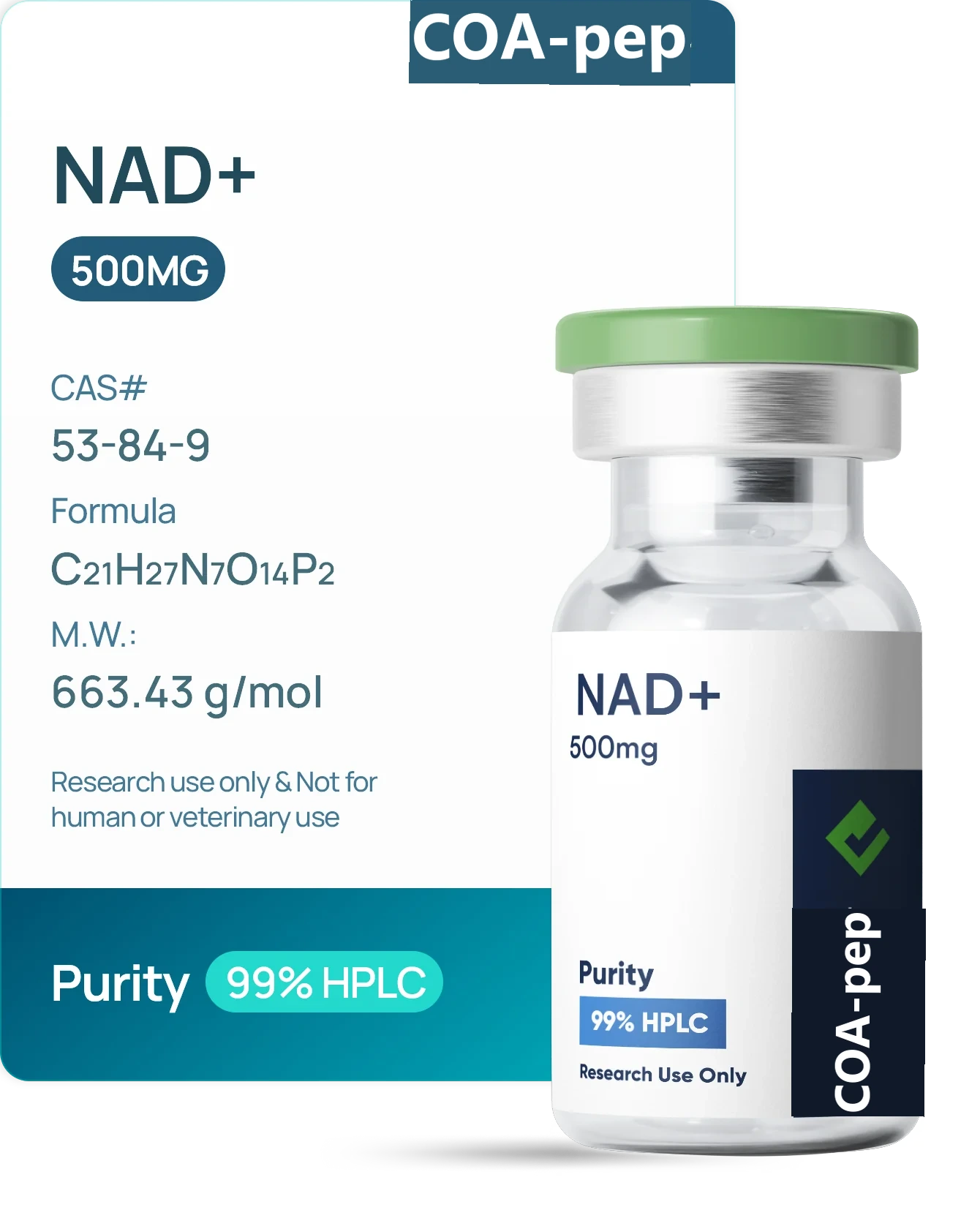
The distinction matters when you read the literature. In most of the well-known mouse studies on metabolism and aging, animals received NMN or NR rather than NAD+ itself, so those results describe precursors. Oral NAD+ is largely broken down in the gut, which is one reason human studies have used precursors. Labs studying the salvage pathway may also use 5-Amino-1MQ, an NNMT inhibitor. Our vial is NAD+ itself, verified by LC-MS. Shop NAD+.
 English
 French
 Spanish